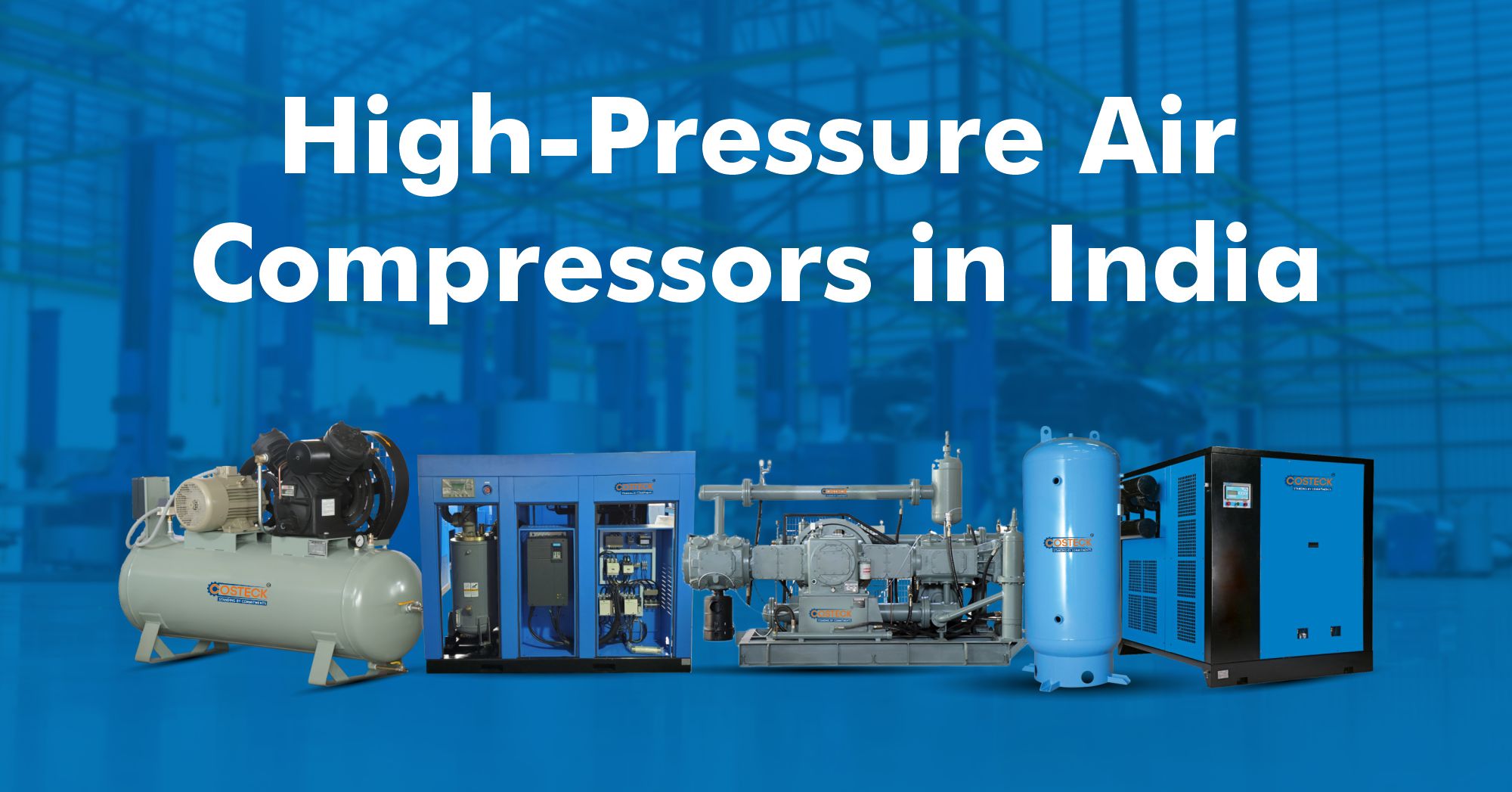
A Simple Guide for Plant Owners
Nobody plans for a compressor breakdown. It just happens, usually at the worst possible time. One minute your forging press is running fine, the next minute your air pressure drops and the whole line stops. Now you’re losing production hours, paying overtime to make up for it, and still not sure why it happened in the first place.
If you manage a plant or handle procurement, you already know compressed air isn’t just “equipment.” It’s a utility your entire process depends on. And when it comes to high-pressure applications, getting the right compressor matters even more.
This guide breaks down everything you need to know about high-pressure air compressors in India, in plain language, without the jargon.
What Is a High-Pressure Air Compressor?
Most factories run their compressed air systems between 7 and 10 bar. That’s considered normal pressure and works fine for basic tools and packaging lines.
High-pressure compressors go beyond that, often 15 bar and up. Some specialised uses need even higher pressure than that.
You’ll typically need a high-pressure air compressor if you work in the following:
- Forging or metal stamping
- Pharma manufacturing
- Chemical processing or distilleries
- Textile and spinning mills
- Power plants
If your machines are asking for more pressure than a standard compressor gives, don’t try to force a regular unit to do the job. It won’t hold up, and you’ll be back to square one within months.
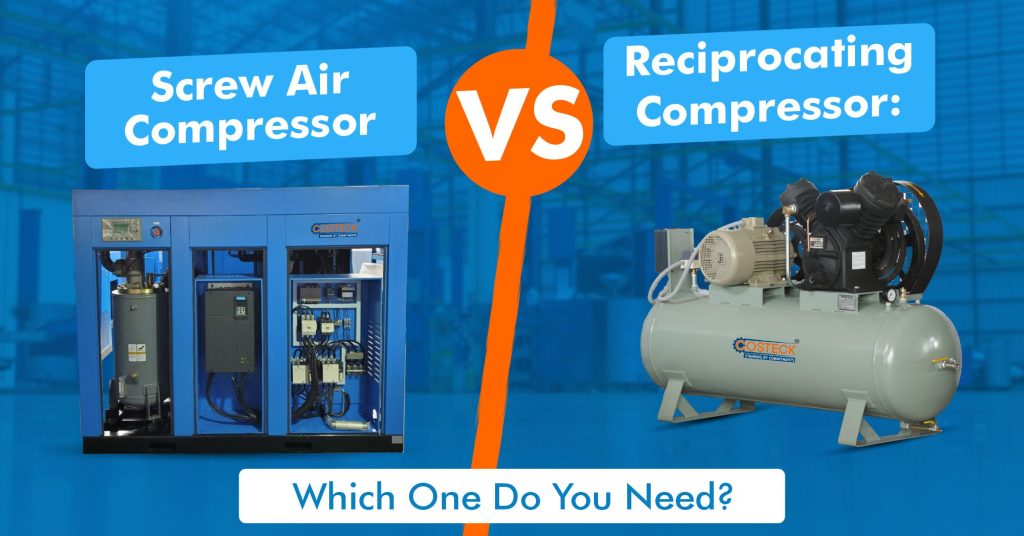
Screw Air Compressor vs. Reciprocating Compressor: Which One Do You Need?
This is usually the first big decision, and it’s an important one.
When a Screw Air Compressor Makes Sense
A screw air compressor works well if your plant runs long hours without stopping. It compresses air continuously using two rotating screws, so there’s no pressure dip between cycles.
Good fit if you:
- Run multiple shifts
- Need steady, uninterrupted air pressure
- Want a quieter machine
- Want lower maintenance over time
When a Reciprocating Compressor Makes Sense
Reciprocating (piston) compressors are older technology, but they’re still a smart choice in the right setting. They use pistons instead of screws, and they’re built for high-pressure, stop-start type work.
Good fit if you:
- Have irregular or seasonal demand
- Need very high pressure but not all day
- Want a simpler, tougher machine for rough environments
- Have a smaller budget
Oil-Free Screw Blowers for Sensitive Industries
If even a small trace of oil in your compressed air is a problem, think pharma or food processing; an oil-free screw blower solves that completely. No oil ever touches the air stream, so there’s no contamination risk and no compliance headache.
There’s no one-size-fits-all answer here. It comes down to how long you run, how much pressure you need, and how clean the air has to be. This is exactly why a quick compressed air demand analysis before you buy saves you money down the line, not just guesswork based on what your neighbor’s factory installed.
Why Energy Costs Matter More Than the Purchase Price
Here’s something a lot of people don’t realise: compressed air is usually the most expensive utility in a factory. Not the compressor itself, the electricity it eats up over the years.
A poorly set up system can waste 20 to 30% of its energy through leaks, wrong sizing, or bad piping. That adds up fast.
A few things that quietly drive up your energy bill:
- Wrong sized compressor. Too big, and it cycles inefficiently. Too small, and it overworks itself. Either way, you’re paying extra.
- Wrong dryer for your setup. Refrigerated and heatless air dryers both protect your equipment, but picking the wrong one for your load adds unnecessary running costs.
- Bad piping layout. Poor PPR piping design means pressure drops before the air even reaches your machines, so the compressor has to work harder just to keep up.
- Small or missing receiver tank. A decent-sized tank smooths out demand spikes, so your compressor isn’t switching on and off constantly.
None of this is about buying the cheapest option. It’s about buying the right system for how your plant actually runs.
A Quick Checklist Before You Buy a High-Pressure Compressor
Before you sign off on a new compressor or upgrade an old one, run through this:
- Know your actual pressure and flow needs. Check your process specs; don’t guess or go by “industry average.”
- Map out your duty cycle. Continuous multi-shift running or occasional stop-start use?
- Check your air purity needs. Do you need fully oil-free air, and to what standard?
- Look at your existing piping and tank capacity. A new compressor won’t fix old bottlenecks.
- Think total cost, not just sticker price. Years of electricity bills usually cost more than the machine itself.
- Ask about spare parts and service turnaround. A compressor stuck waiting for parts for a week costs you more than any efficiency it might save.
- Consider an AMC (Annual Maintenance Contract). Regular checkups catch small issues before they turn into a shutdown.
Common Mistakes Plants Make When Buying Compressors
Even experienced procurement teams get this wrong sometimes. A few patterns worth avoiding:
- Buying based on price alone, without checking long-term running costs
- Skipping the demand analysis and guessing at sizing
- Ignoring the piping and tank setup, and only focusing on the compressor itself
- Mixing brands without checking spare parts availability, leading to long downtime later
- Delaying maintenance until something actually breaks, instead of planning ahead
Avoiding these five mistakes alone can save a plant lakhs of rupees a year in wasted energy and downtime.
Why Buy from One Manufacturer Instead of Multiple Vendors
A lot of Indian factories end up dealing with four different vendors for one compressed air system: one for the compressor, one for the dryer, one for piping, and one for spare parts. When something breaks, everyone points fingers at everyone else.
This is where Costeck Air Pvt. Ltd. does things differently. Based in New Delhi and founded in 2020 by Director Abhishek Gaurav, Costeck is an industrial air compressor manufacturer in India that builds the entire system in house, not just the compressor.
Here’s what they manufacture and service:
- Rotary screw compressors
- Reciprocating compressors
- Oil-free screw blowers
- Refrigerated and heatless air dryers
- Receiver tanks
- PPR piping systems
They also stock spare parts compatible with big-name brands like Atlas Copco, Ingersoll Rand, and ELGi, so if your plant runs mixed equipment, you’re not stuck waiting weeks for an OEM part to arrive.
For ongoing compressed air system maintenance, Costeck offers flexible AMC plans, so your team can plan servicing ahead of time instead of scrambling after a breakdown.
Their client list says a lot too: pharmaceutical companies, chemical plants, distilleries, textile mills, forging units, sugar mills, and power sector names like NTPC, all across North India. These aren’t industries that can afford compressed air failures. They need equipment that just works.
Frequently Asked Questions
What pressure counts as “high pressure” for an industrial air compressor?
Anything above the standard 7 to 10 bar range is generally considered high pressure. Many industrial applications in India, like forging, chemical processing, and PET applications, run anywhere from 15 bar up to much higher, depending on the process.
Is a screw compressor better than a reciprocating compressor?
Neither is “better” on its own. Screw compressors are usually the right call for continuous, multi-shift operations because they run smoothly without pressure dips. Reciprocating compressors work well for high-pressure, stop-start use, or where the budget is tighter. The right choice depends on your duty cycle and pressure needs.
How often should a high-pressure air compressor be serviced?
It depends on usage, but most industrial compressors need routine checks every one to three months, with a full service at least once or twice a year. An AMC (Annual Maintenance Contract) takes the guesswork out of this by scheduling it for you.
Does Costeck Air only sell compressors, or do they service other brands too?
Costeck manufactures its own range of compressors, dryers, tanks, and piping systems, and also supplies spare parts and servicing for other major brands like Atlas Copco, Ingersoll Rand, and ELGi. So if your plant already runs a different brand, they can still help with spares and maintenance.
How much can a poorly maintained compressor system actually cost a plant?
More than most people expect. Leaks, wrong sizing, and bad piping alone can waste 20 to 30% of the energy a system uses. Over a year, that’s a significant chunk of a plant’s electricity bill, on top of the risk of unplanned downtime.
Can Costeck design a custom compressed air system for my plant?
Yes. Costeck offers compressed air demand analysis and can design a system, compressor, dryer, tank, and piping built around your plant’s actual pressure, flow, and purity requirements, rather than a generic off-the-shelf setup.
Get Your Compressed Air System Right the First Time
The best time to fix a compressed air problem is before you install anything, not after the third breakdown this quarter. A proper demand analysis, matched to the right compressor, dryer, and piping setup, saves you years of unnecessary running costs and downtime.
If you’re planning a new high-pressure compressor installation, upgrading an old system, or just tired of dealing with recurring breakdowns, it’s worth talking to a team that builds and services the whole system, not just one part of it.
Reach out to Costeck Air Pvt. Ltd. today for a free compressed air demand analysis, a service quote, or advice on the right high-pressure compressor setup for your plant.
Recent Comments